


Understanding Market Volatility: Embracing Risk for Higher Returns When the Time is Right.
Market volatility often evokes a range of responses, from excitement to anxiety, depending on one’s investment goals and risk tolerance. Volatility measures how much and how quickly the prices of securities, like stocks, fluctuate over time. In general, higher volatility is associated with greater risk, yet also the potential for higher returns. Understanding this balance between risk and reward is critical for investors looking to maximize portfolio performance.
First and foremost, investors need to know what trend the market is in. Is it in a bull trend (upward) or bear trend (downward)?
When Should You Embrace Volatility?
In a bull market, investors should embrace volatility as the potential rewards often justify heightened risk. During these upward-trending periods, high-volatility assets, such as growth stocks and emerging markets, frequently experience rapid gains as investor optimism and economic conditions fuel demand. While volatile assets may see sharp price fluctuations, the overall trend in a bull market is positive and offers the opportunity to capture significant appreciation. By leaning into this volatility, investors can maximize returns, leveraging the bull market’s momentum for accelerated growth.
When should You NOT Embrace Volatility?
In a bear market, investors are often better off avoiding excessive volatility, as the risks tend to outweigh the potential rewards. When markets trend downward, high-volatility assets typically suffer more severe losses, with prices dropping faster and deeper than those of more stable investments, wiping out gains and eroding portfolio value. By reducing exposure to high-volatility assets during bear markets, investors can better preserve their capital, mitigate losses, and position themselves for stability until market conditions improve.
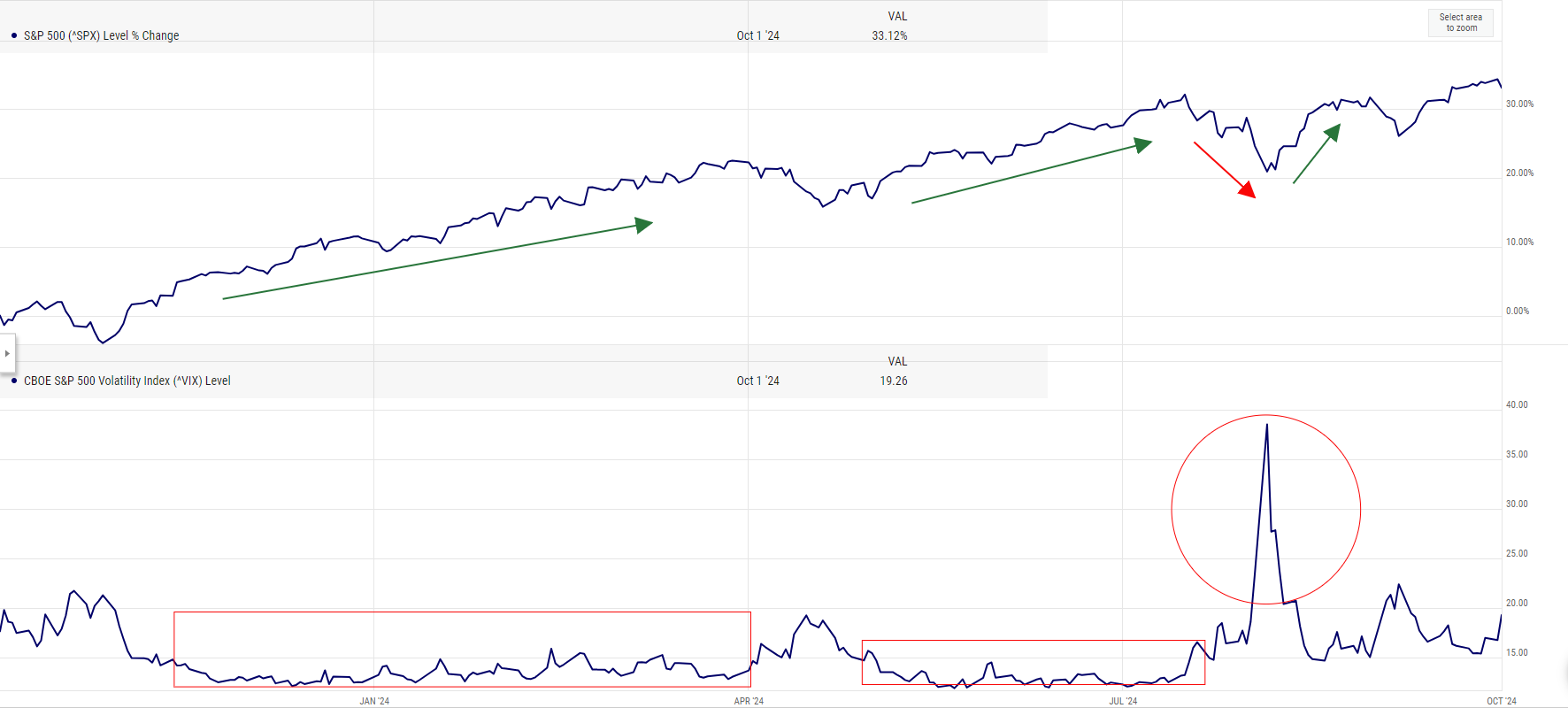
(YCharts, 2024)
Why Embrace Volatility?
Historically, portfolios with higher risk and volatility have outperformed their low-risk counterparts over the long term. Here's why:
- Higher Potential Returns: Stocks or portfolios with greater volatility are usually in growth-oriented sectors like technology, financials, or emerging markets, which experience frequent price fluctuations. This fluctuation isn't just noise; it’s often a sign of these assets’ growth potential and investors benefit from substantial uptrends during market rallies.
- Risk-Return Trade-Off: The risk-return trade-off highlights that to achieve higher returns, one must take on more risk. A low-risk, low-volatility portfolio may offer steadier growth, but it limits potential returns as it usually consists of stable, lower-yield assets such as bonds or dividend-paying stocks.
- Compounding Effect: Time in the market allows high-volatility portfolios to capitalize on the compounding effect. Over decades, the cumulative gains from larger upswings can dramatically increase the overall value of the portfolio. While downturns are an inevitable part of investing, avoiding significant drawdowns is key to protecting long-term growth.
Building a Volatile Yet Resilient Portfolio
Investors looking to benefit from volatility should focus on a few key principles:
- Diversification: A high-risk portfolio should still incorporate a range of sectors and asset classes to spread exposure and protect against severe downturns. By diversifying across areas with varying levels of volatility and focusing on sectors showing relative strength, investors can balance growth potential with risk management, reducing vulnerability while maximizing returns.
- Active Risk Management: Implementing active risk management strategies is crucial to protecting assets from large drawdowns during market downturns. By regularly assessing and adjusting portfolio exposure based on market conditions, investors can reduce the impact of severe losses, preserving capital and supporting steady, long-term growth.
- Sector and Asset Class Rotation: Actively rotating sectors and asset classes within a portfolio is essential to maintain the desired level of risk and diversification. By reallocating to areas with stronger relative performance and favorable economic conditions, investors can optimize for sustained growth, aligning the portfolio with current market trends while managing overall risk.
In the end, the choice between a high-volatility and low-volatility portfolio should depend primarily on market trends and direction, rather than solely on individual goals, risk tolerance, or investment time horizon. In favorable market conditions, embracing volatility can unlock significant growth potential, rewarding those who can withstand short-term swings with long-term wealth generation. Conversely, during periods of economic uncertainty, a shift toward lower-volatility assets may protect against losses and preserve capital. By aligning portfolio strategy with prevailing market conditions, investors can strike a balance that maximizes returns while managing risk effectively, ensuring resilience and opportunity in both up and down markets.
Sources:
YCharts. (2024). Financial Research and proposal platform. https://ycharts.com/